And yes indeedy there is a crater dug beneath the lander. We can even be certain that it wasn’t there before because we have footage from it.
This article explains that we can deduce the nature of the surface as a result:
“the Zhurong landing site has a shallow regolith structure of a surficial layer of dust and sand over a layer of duricrust, with brecciated/fragmented rocks and bedrocks beneath.”
Rather than a layer of dust over solid rock, which is the case in the Apollo sites, the Mars lander touched down on a dust covered crust, beneath with debris beneath it.
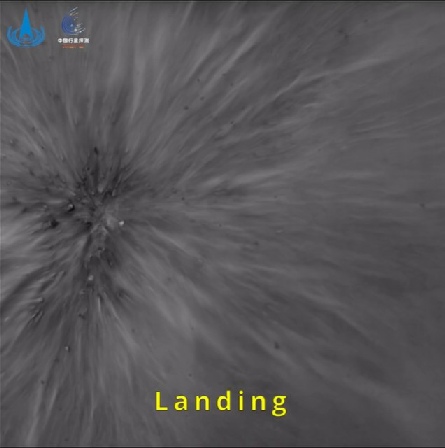
I am not a rocket scientist. Full disclosure. It strikes me, however, that the last thing you want beneath your rocket is a big hole. Big holes mean instability when you land. I have also always maintained that if an Apollo rocket was to land with enough firepower out of its descent engine to dig a big hole, it’s going to be exerting more thrust than it needs to to actually land. They may have had a theoretical maximum thrust of 10000lb, but that is not the thrust it is exerting by the time it lands. Prove me wrong.
So far, all we have is one lander on another planet with a hole under it. Can we find any more? How about Lunokhod 1 and Chang’e-
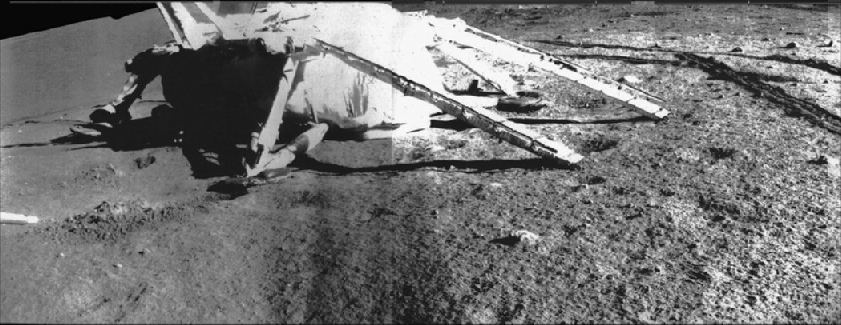

Nothing obvious there, not even mentioned in the paper.
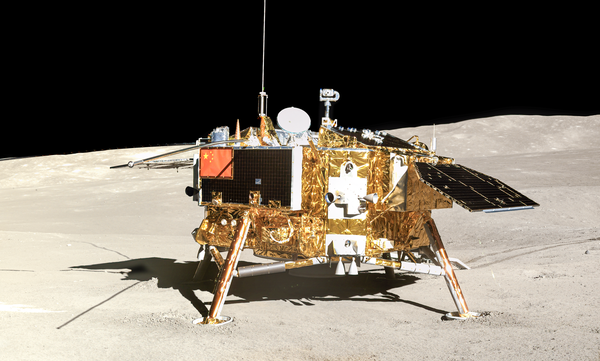

Smoking Gun #3 -
A blast craters. Every hoaxnut thinks there should be one. None of them can explain why. Rasa’s claim, outlined in this, is that the enormous LM descent engine should be gouging out a big hole, because look how big a hole this Mars lander from China made!
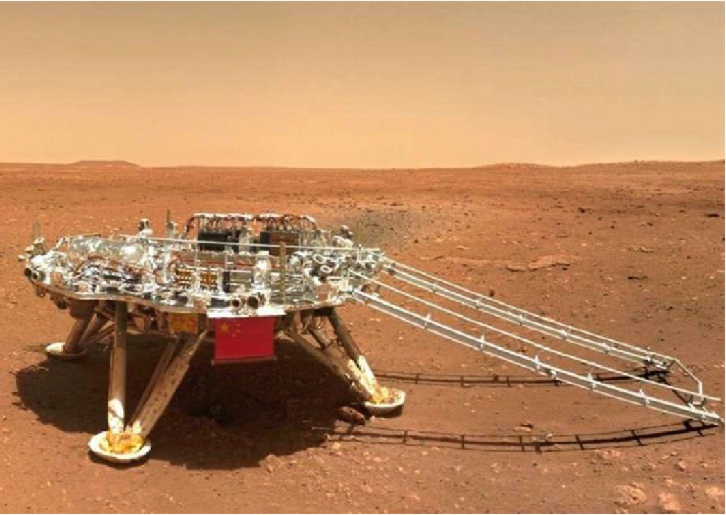
This is the image he’s using:
Let’s cut to the chase. You won’t find any. Each landing site is unique. Any interactions with the surface by a descent of any kind is dictated by the those unique conditions. The lack of a blast crater does not mean they didn’t have an impact on the surface, nor does it mean they didn’t land there.